
When Genre-Bending Short Fiction Teaches Craft Lessons
When Horror Stops Scaring You and Starts Meaning Something
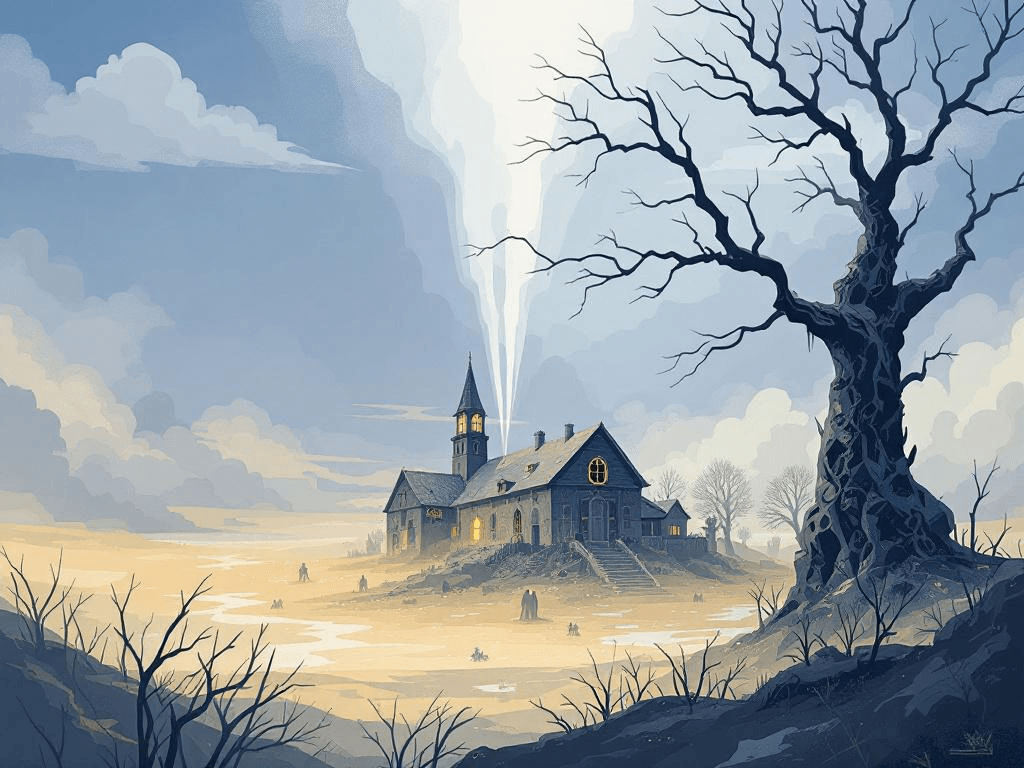
Shirley Jackson’s The Lottery is among the most-assigned short stories in American high schools, which means most readers think they know what it does. They don’t, quite. The story’s famous twist, a small town conducts an annual lottery where the winner is stoned to death, reads as horror on the surface. But Jackson withholds the horror’s logic entirely. There’s no explanation, no origin myth, no monster. The violence is bureaucratic, cheerful, communal; the story isn’t actually about fear. It’s about social compliance: how thoroughly ordinary people can participate in atrocity when the ritual is familiar enough. That’s not what horror typically promises. Horror usually promises a threat you can identify and fear. Jackson delivers a threat you recognize from the inside, which is considerably worse.
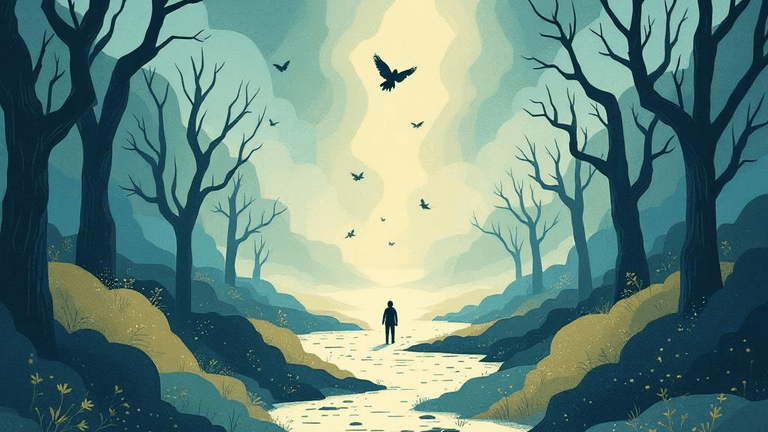
Carmen Maria Machado’s The Husband Stitch works a similar operation on different material. It borrows the structure of a campfire ghost story, specifically the urban legend of the woman with the green ribbon around her neck, and uses it to conduct a precise feminist autopsy of marriage, bodily autonomy, and the stories women are told about themselves. The horror elements are real; the story is genuinely unsettling. But the dread accumulates from cultural recognition, not supernatural threat.
What both stories share is this: genre as a delivery mechanism for something the genre wasn’t designed to carry. The lesson for writers is specific. Know what your genre promises readers. Understand the emotional contract you’re entering when you borrow its conventions. Then decide, deliberately, which promises to keep and which to break; be prepared to make the breakage mean something.
Science Fiction That Forgot to Explain the Science

The conventional expectation for science fiction is that it earns its premises. You get the world-building, the extrapolated technology, the internal logic that makes the impossible feel plausible. Ted Chiang’s Story of Your Life, the basis for the film Arrival, technically delivers all of this. There’s a linguist, alien visitors, a detailed account of a non-human language that operates on non-linear time. Chiang explains the Heptapod writing system with genuine rigor. But he doesn’t explain it to satisfy scientific curiosity. He explains it to make the ending’s emotional logic inevitable.
The non-linear time perception isn’t a cool premise; it’s the mechanism that allows a mother to experience her daughter’s death and birth simultaneously, to grieve someone who is also still becoming. Remove the science fiction scaffolding and the emotional core collapses. The genre-bending fiction here isn’t decoration; it’s structural.
Ursula K. Le Guin’s The Ones Who Walk Away from Omelas takes a different approach: it wears science fiction clothing while operating almost entirely as moral philosophy. There are no spaceships. The premise is a city of perfect happiness sustained by the deliberate suffering of one child. Le Guin doesn’t resolve the thought experiment. She simply presents it, and the reader has to sit with what their answer reveals about them. It’s genre-bending fiction that uses SF’s permission to speculate as a way of making ethical discomfort inescapable.
The Story That Doesn’t Know What It Is (And That’s the Point)
Jorge Luis Borges’ The Garden of Forking Paths is, depending on how you read it, a spy thriller, a philosophical meditation on time and possibility, and a metafictional puzzle about the nature of narrative itself. The answer to which one it “really” is: all three simultaneously. Remove any layer and the story collapses. This is the craft move worth studying carefully. Borges uses the spy plot as scaffolding. Without the thriller tension, a man being pursued, a message that must be delivered before he’s caught, readers wouldn’t stay for the philosophy. Without the philosophy, the thriller would be trivial. The two genres don’t compete; they depend on each other. The metafictional layer, the revelation that the labyrinthine novel within the story is a model of time itself, only lands because both the thriller and the philosophy have done their work first.
Kelly Link operates in a similar space with considerably more contemporary strangeness. Her story The Summer People moves between fairy tale, horror, and literary realism without ever fully committing to any of them. The genre rules simply don’t apply in the way you’d expect. A girl cares for a vacation house belonging to supernatural beings; the story is also about isolation, about a father’s absence, about the particular loneliness of rural adolescence. None of those descriptions captures it completely.
For aspiring writers, the takeaway is practical: genre isn’t a box. It’s a set of reader expectations you can borrow, remix, or deliberately frustrate, as long as you’re doing it with intention and giving readers something in exchange for the disorientation. For readers, these are the stories you can’t easily summarize at a dinner party, which often means they stay with you longer than the ones you can.
Romance Without the Resolution
Romance often gets overlooked in craft discussions, which is its own form of literary condescension. The genre has a clear contract: emotional investment plus satisfying resolution. Readers show up knowing what they’re owed. Alice Munro’s Runaway is technically a love story. It’s about a woman who tries to leave her marriage and cannot; about the complicated gravity of relationships we can’t quite escape and can’t quite commit to. Munro gives readers everything romance promises except comfort. The emotional investment is total; the story is devastating in its precision about how people stay in situations that diminish them. The resolution refuses to arrive. Carla goes back. The story ends. That refusal is the point.
Munro isn’t breaking her genre contract carelessly; she’s honoring its emotional promise while rejecting its plot promise, and the gap between those two things is where the story lives. Literary diversity in short fiction often looks like this: a writer taking a genre seriously enough to understand exactly which of its promises are load-bearing and which are merely conventional. Satisfying a genre’s emotional promise doesn’t require satisfying its plot promise. Those are separable, and Munro separates them with surgical precision.
How to Read a Genre-Bending Story
Start by asking what the genre is promising you. Horror promises a threat. Romance promises resolution. Science fiction promises a coherent speculative logic. These aren’t rigid rules, but they’re real expectations, and they shape how you read from the first paragraph. Then notice when the story keeps or breaks that promise. If a horror story makes you sad instead of scared, that’s information. The story is telling you what it’s actually about; the genre is the vehicle, not the destination.
The moment your reading expectations shift, the moment you realize you’re not getting what you came for, and you don’t mind; is usually where the story’s real subject reveals itself. Pay attention to what the “wrong” genre element is doing. In Story of Your Life, the alien linguistics are doing grief. In The Lottery, the cheerful communal ritual is doing complicity. The genre violation is rarely accidental in the stories worth your time.
For writers specifically: genre conventions are inherited reader emotions. When you borrow a genre, you borrow its emotional infrastructure; the associations, the expectations, the specific flavor of attention readers bring. That’s a powerful resource. Use it deliberately, not by default.
The Stories That Outlast Their Labels
Short fiction‘s compression is what makes genre-bending possible, not incidental. There’s no room for comfortable genre autopilot when you have 25 pages. Every convention you deploy has to earn its place, and that pressure produces stories where the genre is never the destination; only the vehicle.
The best of these short story recommendations don’t transcend genre by ignoring it. They transcend it by understanding it so thoroughly that the conventions become tools rather than constraints. A writer has to know exactly what horror promises before she can withhold it. Has to know what science fiction can make a reader believe before using that belief to break something open. Has to know how thriller tension works before putting philosophy inside it.
Read these stories with attention to the moment you stop knowing what you’re reading. That discomfort is where the work happens. Go find them. They’ll likely hold up to the scrutiny.